

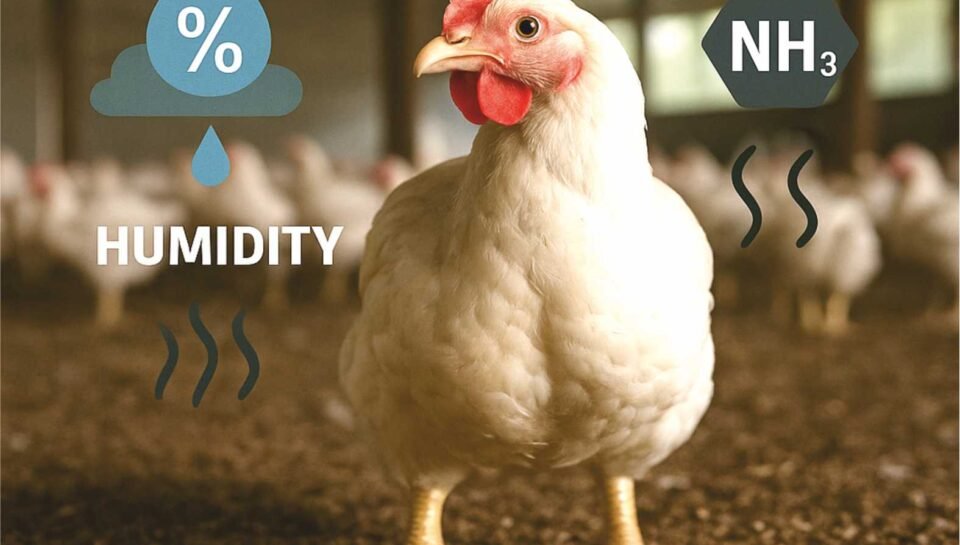
Ammonia buildup is a common challenge in poultry farming and one of the most overlooked factors affecting bird health and productivity. It is produced from the breakdown of poultry droppings, especially in wet and poorly managed litter conditions. High ammonia levels can cause respiratory problems, reduced growth, eye irritation, and increased susceptibility to diseases.
Maintaining low ammonia levels is essential for a healthy and profitable poultry operation. Here are the best ways to control and remove ammonia from your poultry pen:
1. Maintain Dry Litter
Moisture is the main driver of ammonia production. Always ensure your litter is dry and well-aerated. Replace wet spots immediately, especially around drinkers, and avoid water spillage.
2. Improve Ventilation
Proper airflow helps remove ammonia gas from the poultry house. Use natural or mechanical ventilation systems such as windows, fans, and vents to ensure continuous air exchange.
3. Fix Water Leakages
Leaking drinkers are a major cause of wet litter. Regularly check and repair drinkers to prevent unnecessary moisture buildup in the pen.
4. Use Absorbent Litter Materials
Materials like wood shavings, rice husk, or sawdust help absorb moisture and reduce ammonia formation. Ensure litter is spread evenly and maintained at appropriate depth.
5. Apply Litter Treatment Products
Products such as lime or commercial ammonia binders can be used to reduce ammonia levels in the litter. These help neutralize ammonia and improve air quality.
6. Avoid Overcrowding
High stocking density leads to more droppings and faster ammonia buildup. Maintain recommended stocking density to ensure proper space and airflow.
7. Regular Litter Turning
Turning the litter frequently helps to dry it out and prevent compaction, reducing ammonia release.
8. Practice Good Biosecurity and Cleaning
After each production cycle, thoroughly clean and disinfect the poultry house. Remove old litter and allow the pen to dry properly before introducing new birds.
Ammonia control is not a one-time action but a continuous management practice. By maintaining dry litter, ensuring proper ventilation, and practicing good farm hygiene, farmers can significantly reduce ammonia levels, leading to healthier birds, better growth performance, and improved farm profitability.
A clean and well-managed poultry environment is key to successful farming.
#PoultryFarming #PoultryManagement #FarmBiosecurity #AmmoniaControl #HealthyFlock #BroilerFarming #LayerFarming #TurkeyFarming #Agriculture #FarmManagement #LivestockHealth #SustainableFarming #MacoDevFarms